

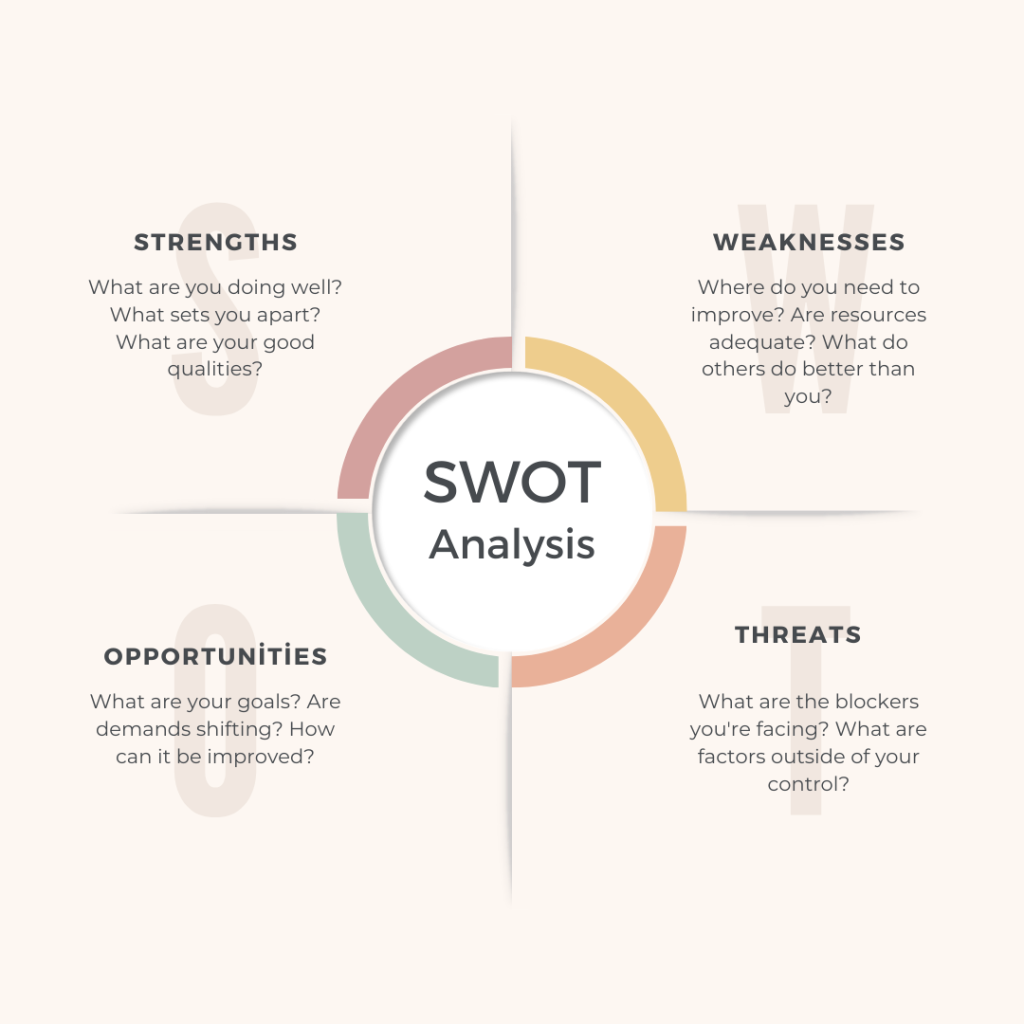
If you want to be successful in life, it’s important to be aware of not only your strengths but also your weaknesses. This is where SWOT analysis comes in. SWOT analysis is a method that shows the strengths, weaknesses, opportunities, and threats related to your current situation or your business.
You can analyze the current situation by asking yourself the right questions under the following headings:
Strengths
Identifying your strengths is the first step in the SWOT analysis process. What are your strong points? In what areas are you superior to your competitors? What are the successful aspects of yourself and your business? By conducting such analyses, you should know what you excel at in your business and your life.
Weaknesses
The second stage in SWOT analysis is discovering our weaknesses. You need to discover the points where you are weak and confront them. In which areas are your competitors better than you? What are the shortcomings that others see in you or your business? You must honestly answer such questions.
Opportunities
After carefully analyzing your strengths and weaknesses, you can move on to the opportunities stage. What opportunities do you see in your business sector? What are the shortcomings of your competitors in the industry? What are the industry trends? By finding answers to these questions, you can discover new opportunities that you may not have noticed before.
Threats
Congratulations, you’ve reached the final stage of SWOT analysis. The threats stage identifies factors that could jeopardize yourself or your company. What problems might you encounter? Who are the new competitors in your business? What financial crises could arise? What are the customer dissatisfaction issues? Are there any legal regulations that could negatively impact you? You need to find answers to these questions. After identifying threats, you can take measures to protect yourself.
When conducting a SWOT analysis, it’s important to be objective. If you’re not sincere, it won’t be useful. After the SWOT analysis, you should work on improving your weaknesses, keeping your strengths in check. Consider what you can do for opportunities and increase your awareness for threats.
Would you like to see an example of a SWOT analysis? Let’s consider a scenario for a small business—a local coffee shop.
Strengths:
Prime Location: The coffee shop is situated in a high-traffic area, attracting a steady flow of customers.
Unique Coffee Blends: They offer exclusive coffee blends that set them apart from competitors.
Loyal Customer Base: A strong community presence has built a loyal customer base over the years.
Skilled Baristas: The coffee shop employs experienced and skilled baristas who provide excellent service.
Weaknesses:
Limited Seating: The shop has limited seating capacity, potentially losing customers during peak hours.
No Drive-Through: In an era of convenience, lacking a drive-through may be a drawback.
Single Supplier: Dependency on a single coffee bean supplier may pose a risk in case of shortages or quality issues.
Limited Marketing Budget: The shop has a small marketing budget, limiting promotional activities.
Opportunities:
Online Presence: Expanding the online presence through social media can attract a broader audience.
Collaborations: Partnering with local businesses for joint promotions can tap into new customer segments.
Diversification: Introducing new products like pastries or merchandise can diversify revenue streams.
Eco-Friendly Initiatives: Embracing sustainability trends, such as biodegradable packaging, can appeal to environmentally conscious customers.
Threats:
Competition: Increased competition from new coffee shops in the vicinity.
Economic Downturn: During economic downturns, customers may cut discretionary spending on luxuries like specialty coffee.
Changing Consumer Trends: Shifts in consumer preferences towards healthier alternatives or non-coffee beverages.
Supply Chain Disruptions: Any disruptions in the supply chain could affect the availability of key ingredients.
This SWOT analysis provides insights for the coffee shop owner to capitalize on strengths, address weaknesses, seize opportunities, and mitigate potential threats, ultimately contributing to better business decision-making.

