

Feeling like your thoughts are ping-ponging around your brain? There’s a secret weapon: mind mapping. Mind mapping is a dynamic and visually engaging technique that not only organizes your thoughts but also sparks creativity in ways you never thought possible.
The Power of Visual Thinking
Mind mapping is a technique that involves creating a visual representation of your thoughts and ideas. It’s a way of organizing information in a way that is easy to understand and remember. Mind maps are often used to brainstorm ideas, plan projects, and organize complex information.
One of the key benefits of mind mapping is that it allows you to see the big picture. Mind mapping isn’t just about pretty pictures; it’s a powerhouse for boosting productivity. By creating a visual representation of your ideas, you can see how they are connected and how they fit together. This can help you identify patterns and relationships that you might not have noticed otherwise.
Another benefit of mind mapping is that it can help you think more creatively. Ever found yourself staring at a blank page, struggling to kickstart your creativity? Mind mapping is your creative catalyst! By organizing your thoughts in a non-linear way, you can break free from traditional thinking patterns and come up with new and innovative ideas.
So how do you get started with mind mapping?
The first step is to choose a topic or idea that you want to explore. If you’re new to mind mapping, fear not! Getting started is as easy as putting pen to paper – or stylus to screen. Once you have your topic, you can start creating your mind map. There are many different tools and techniques that you can use to create a mind map, but the basic idea is to start with a central idea and then branch out from there. You’ll be amazed at how quickly you can turn chaos into clarity.
As you create your mind map, you can add new ideas and connections as they come to you. You can also use color coding and other visual elements to help you organize your ideas and make connections between them.
Here’s an example of a mind map:
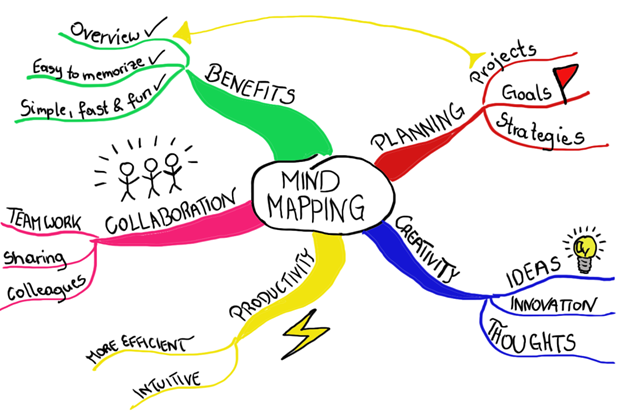
As you can see, the central idea is creating a “Mind Mapping”. The branches then extend outwards to cover different aspects of the topic, such as “Planning”, “Productivity”, and “Creativity”. The use of color coding and images makes it easy to understand and remember the different ideas.

